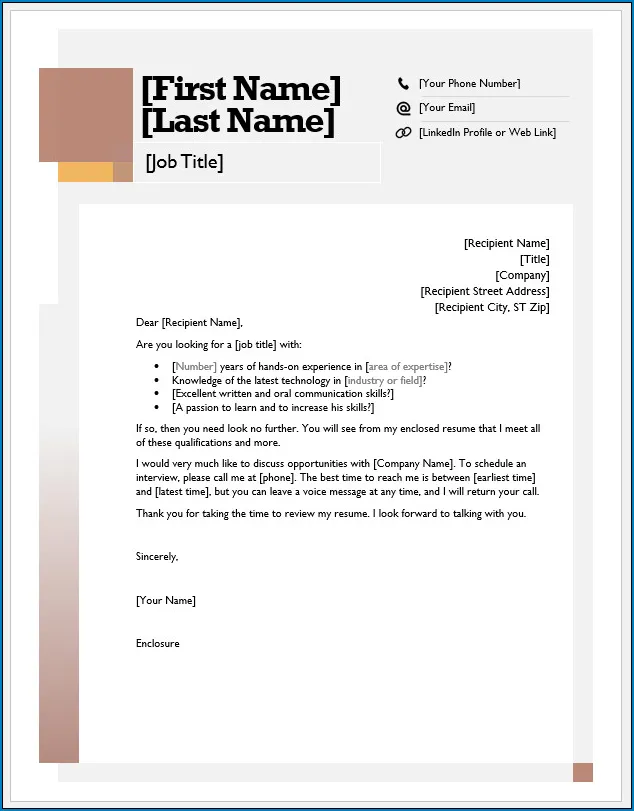
What is a Beginner Cover Letter
A beginner cover letter is a crucial document for anyone new to the job market or with limited professional experience. Its primary purpose is to introduce yourself to a potential employer, express your interest in a specific position, and highlight your relevant skills and qualifications. Unlike experienced professionals who can leverage extensive work history, beginners often rely on academic achievements, extracurricular activities, volunteer work, and transferable skills to make a compelling case. The letter serves as a bridge, connecting your potential to the employer’s needs and setting the stage for a positive first impression. A well-crafted beginner cover letter can significantly increase your chances of securing an interview and landing your first job or internship. Remember, it’s your opportunity to show personality and enthusiasm, even without a long resume to back it up. It is one of the most important documents in the beginning of your career. This guide will make sure you know what to do and what to avoid.
Key Elements of a Beginner Cover Letter
To write a successful beginner cover letter, you need to understand its essential components. Each element plays a vital role in conveying your message effectively and capturing the reader’s attention. From the layout to the content, every detail should be carefully considered to present yourself professionally. This section breaks down the fundamental parts of a cover letter and explains how to make them work for you. Mastering these basics ensures you’ll create a cover letter that stands out and makes a positive first impression on potential employers, even if you’re just starting your career. Let’s dive into these key elements and learn how to use them to your advantage when applying for jobs or internships.
Contact Information

At the top of your cover letter, include your contact information. This typically includes your full name, phone number, email address, and optionally, your LinkedIn profile URL or a link to an online portfolio. Make sure your email address is professional, using your name or a variation of it. This ensures the hiring manager can easily reach you. Your contact details should be clear, easy to read, and accurately reflect how you want potential employers to communicate with you. Correct formatting and up-to-date information demonstrate attention to detail and professionalism. Double-check all the information for accuracy, because a simple error here can lead to missed opportunities.
Greeting
Address your cover letter to the hiring manager by name if possible. Researching the company and identifying the appropriate person shows initiative and attention to detail. If the hiring manager’s name is unavailable, use a professional salutation such as ‘Dear Hiring Manager’ or ‘Dear [Department Name] Team’. Avoid generic greetings like ‘To Whom It May Concern’ as they lack personalization. The greeting sets the tone for your entire letter, making it essential to start with a professional and respectful approach. It indicates that you’ve taken the time to understand the company and the role you are applying for. This small step can significantly improve the chances of your cover letter making a positive impact.
Opening Paragraph
The opening paragraph is your first chance to make a strong impression. Clearly state the position you are applying for and how you learned about it. Briefly mention why you are interested in the role and the company. This should be concise, engaging, and immediately grab the reader’s attention. Demonstrate your enthusiasm and highlight the key skills or experiences that align with the job requirements. The opening should set the stage for the rest of your letter, making the reader want to continue and learn more about you. The opening paragraph is not just an introduction, it’s your chance to create an initial positive impression and make sure the reader keeps on reading.
Body Paragraphs

The body paragraphs are where you showcase your qualifications, skills, and experiences. Use this section to provide specific examples of how your abilities align with the job requirements. When you don’t have a long work history, focus on transferable skills developed through academics, volunteer work, or extracurricular activities. Quantify your achievements whenever possible, providing tangible evidence of your capabilities. Structure your paragraphs logically, using clear and concise language. Avoid simply restating your resume; instead, elaborate on your relevant experiences and explain how they make you a good fit for the role. The body paragraphs are where you explain why you’re the right candidate.
Highlighting Skills and Experiences
Focus on the skills and experiences that are most relevant to the job description. Even without extensive work experience, you can highlight skills like communication, teamwork, problem-solving, and leadership. Use the STAR method (Situation, Task, Action, Result) to provide detailed examples of how you’ve demonstrated these skills in the past. For example, if you’re applying for a customer service role, describe a time you successfully resolved a customer issue, explaining the situation, the task you undertook, the specific actions you took, and the positive outcome. Highlighting specific examples proves your abilities and makes your application more impactful. Make sure that you tailor the information to match the job requirements.
Demonstrating Enthusiasm and Interest
Show genuine enthusiasm for the role and the company. Explain why you are interested in the specific position and what attracts you to the organization. Research the company’s mission, values, and recent projects, and mention how your goals align with theirs. This demonstrates that you’ve done your homework and are genuinely interested in contributing to their success. Express your passion for the industry or field, and describe how you can contribute to the company’s goals. Showing enthusiasm can greatly boost your application by making you more memorable. Let the hiring manager know that you’re eager to get started. Show that you are passionate about the job and that you will take the role seriously.
Closing Paragraph

In the closing paragraph, reiterate your interest in the position and express your eagerness to discuss your qualifications further. Thank the hiring manager for their time and consideration. Include a call to action, such as inviting them to contact you for an interview. Keep the tone professional and enthusiastic, and make sure to proofread this section carefully to avoid any errors. A strong closing paragraph leaves a lasting positive impression, encouraging the hiring manager to take the next step in the hiring process. Make sure that you are polite, and include an invitation to take the next step. The closing should be as strong as the opening.
Formal Closing and Signature
Choose a professional closing, such as ‘Sincerely’, ‘Best regards’, or ‘Thank you’. Avoid overly casual closings. After the closing, leave a few lines for your signature (if printing and mailing the letter) followed by your typed name. This adds a personal touch and confirms the authenticity of your application. Ensure your signature is legible and easy to read if you are going to print the document. The formal closing and signature complete your cover letter, making it a polished and professional document. It should include your full name, and your contact information to make it easy for them to reach out.
Beginner Cover Letter Examples
Reviewing examples can provide valuable insights into structuring and writing your own cover letter. Each example below highlights different scenarios and approaches, helping you tailor your letter to your specific situation. Here are a few examples, along with explanations to guide you. Consider these examples as models for your own letters, understanding the core elements and how they can be adapted to suit the unique requirements of the job you’re applying for.
Example 1 Internship Cover Letter

This example demonstrates how to apply for an internship. It highlights academic achievements, relevant coursework, and any related projects or volunteer experiences. The letter focuses on the skills you’ve developed and how they align with the internship’s requirements. It should also show enthusiasm for the learning opportunities and contributions you can make to the company during your internship. Remember, the goal of an internship cover letter is to show how your skills and enthusiasm will benefit the company. In this situation, it’s especially important to convey your eagerness to learn and grow within the organization.
Example 2 Entry-Level Position
This example is for an entry-level position. It emphasizes any part-time jobs, volunteer experiences, or projects that demonstrate relevant skills. It may include transferable skills like communication, problem-solving, or teamwork. The letter should also showcase your willingness to learn and grow within the company. This example emphasizes your potential and eagerness to start your professional journey. Highlight how your skills will help you do the job. The key is to show your potential, and that you are willing to learn. Show off the experiences that can help you do the job well.
Example 3 Cover Letter Recent Graduate
This example is tailored for recent graduates, highlighting academic achievements, research projects, and any relevant internships or extracurricular activities. The cover letter should showcase skills and knowledge gained during your studies and explain how they apply to the job requirements. It also focuses on demonstrating your ability to transition from academics to a professional environment. Mention any thesis work or capstone projects to display your expertise. The goal is to bridge the gap between your education and the job requirements. This will enable you to showcase the skills gained from your academic achievements, and your ability to transition to the job market, as well as any related experiences.
Tips for Writing a Strong Beginner Cover Letter

Crafting a standout cover letter involves more than just following a template. Implementing strategic tips can significantly enhance your application. Here are some essential strategies. Each of them will help you create a cover letter that grabs attention and effectively communicates your qualifications. Remember that a well-crafted cover letter should highlight your skills, show your enthusiasm, and demonstrate that you’re a great fit for the job. Taking the time to implement these tips will improve the overall quality of your cover letter and make you a stronger candidate.
Research the Company
Before writing your cover letter, thoroughly research the company. Visit their website, read their ‘About Us’ section, and review their social media profiles. Understand their mission, values, and recent projects. Tailor your cover letter to reflect this understanding. Mention specific aspects of the company that resonate with you, demonstrating genuine interest. This research allows you to align your qualifications with their needs and show that you’ve invested time and effort in understanding their organization. Addressing the specific values of the company, makes it clear you have spent time looking at the organization. This also will make you seem a better fit.
Tailor Your Letter
Customize each cover letter for the specific job and company. Avoid using a generic template. Carefully review the job description and highlight the skills and experiences that match the requirements. Explain how your qualifications align with what the employer is looking for. Tailoring your letter shows that you are seriously interested in the position and understand the company’s needs. Customize your cover letter every time you apply for a job. Make sure that you adapt it to the job description, as well as the organization. Show the reader you want the job by tailoring your cover letter to the job and the organization.
Proofread Carefully

Proofread your cover letter multiple times for any errors in grammar, spelling, and punctuation. These errors can create a negative impression and diminish your credibility. Use grammar checkers and spell-checking tools, but also read the letter aloud to catch any awkward phrasing or mistakes. Ask a friend or family member to review your cover letter as a second pair of eyes can often identify errors you might miss. Proofreading ensures that your cover letter is polished and professional. Errors will make it look like you do not care about the job. Make sure your cover letter is perfect, to create a good first impression. This is essential to your application.
Tools for Beginner Cover Letter
Utilizing the right tools can significantly streamline the cover letter writing process. Several resources can help you create a polished and professional cover letter. Many of these tools are designed to assist beginners in highlighting their skills, formatting their content correctly, and avoiding common mistakes. By leveraging these tools, you can ensure your cover letter is well-written, impactful, and increases your chances of landing an interview. The right tools make the writing process easier. Here are some tools to help you write the perfect beginner cover letter.