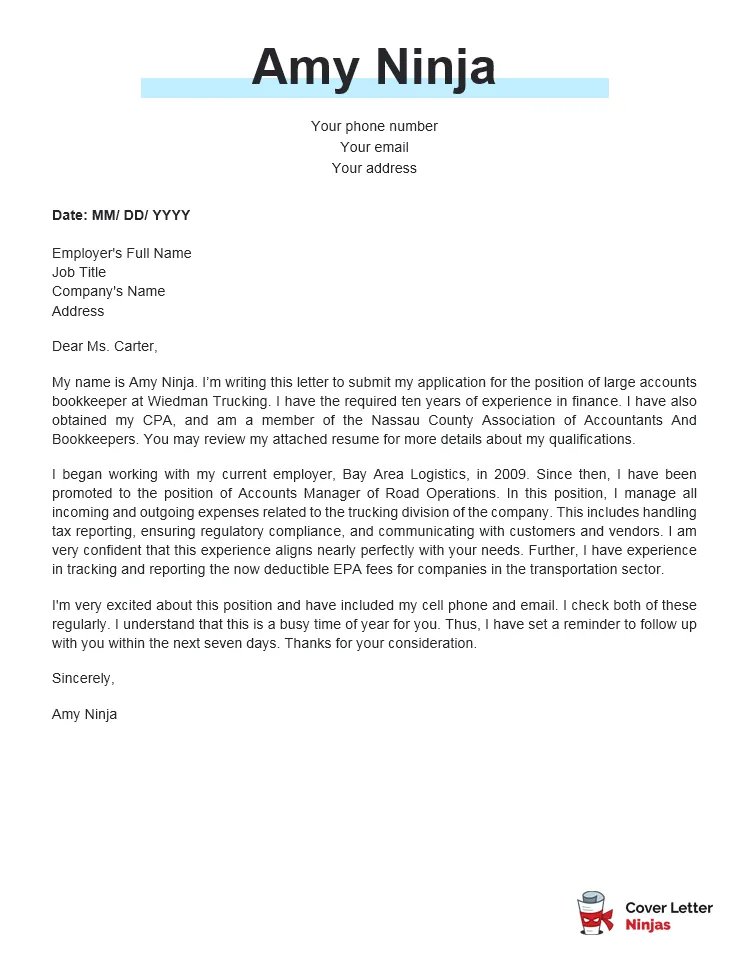
Crafting a Compelling Bookkeeper Cover Letter
A well-crafted cover letter is your first impression on a potential employer. It’s an opportunity to showcase your skills, experience, and personality, and to demonstrate why you are the perfect fit for the bookkeeper position. Unlike a resume, a cover letter allows you to tell a story, connecting your qualifications to the specific needs of the company and the role. This guide provides a comprehensive cover letter sample for bookkeepers, offering practical tips and advice on creating a document that gets you noticed and hired.
Understanding the Purpose of a Bookkeeper Cover Letter
The primary purpose of a cover letter is to introduce yourself and your resume to a potential employer. It should explain why you’re interested in the job, highlight your relevant skills and experience, and persuade the hiring manager to read your resume and consider you for an interview. A strong cover letter demonstrates your understanding of the job requirements and your ability to meet them. It also showcases your personality and communication skills, setting you apart from other applicants.
Highlighting Your Bookkeeping Skills

Your cover letter should clearly articulate your core bookkeeping skills. This includes proficiency in financial record-keeping, accounts payable and receivable, reconciliation, and general ledger management. Tailor your skills to match the specific requirements listed in the job description. Use the job posting as a guide to identify the most important skills the employer is seeking and emphasize those in your cover letter.
Accounting Software Proficiency
In today’s digital world, proficiency in accounting software is crucial. List the software you are proficient in, such as QuickBooks, Xero, Sage, or other relevant platforms. Mention any certifications or training you have received in these software programs. If the job description specifies particular software, make sure to highlight your experience with it. Experience with multiple software packages is a significant asset.
Attention to Detail and Accuracy
Bookkeeping requires a high degree of accuracy and attention to detail. Emphasize your ability to maintain precise financial records, detect errors, and ensure compliance with accounting standards. Provide specific examples from your previous roles where you demonstrated these skills, such as successfully reconciling accounts or identifying discrepancies.
Communication and Interpersonal Skills

Bookkeepers often interact with various stakeholders, including clients, vendors, and other members of the finance team. Highlight your strong communication and interpersonal skills, emphasizing your ability to clearly convey financial information, collaborate effectively, and maintain positive relationships. Examples can include experience in explaining financial reports and the ability to work collaboratively with others.
Showcasing Relevant Experience
Your cover letter should summarize your relevant work experience, focusing on accomplishments rather than just listing job duties. Describe your experience in previous bookkeeping roles, the size and type of organizations you have worked with, and the specific responsibilities you handled. Use action verbs to start each of your sentence, and include examples that quantify your achievements.
Tailoring Your Cover Letter to the Job Description
Customize your cover letter for each job application. Read the job description carefully and identify the key requirements and qualifications. Highlight the skills and experience that align with the specific needs of the employer. Use the same keywords and phrases found in the job posting. Demonstrating that you understand the company’s needs and tailor your application accordingly significantly increases your chances of getting noticed.
Researching the Company

Before writing your cover letter, research the company to understand its mission, values, and culture. This knowledge will help you tailor your letter to the organization’s specific needs and demonstrate your genuine interest in the role. Mentioning specific aspects of the company that resonate with you, or how your skills align with their goals, shows that you’ve gone the extra mile to prepare your application.
Formatting Your Cover Letter for Success
The format of your cover letter is critical to making a positive first impression. A well-formatted cover letter is easy to read, professional, and visually appealing. Use a clear and concise layout to make it easy for the hiring manager to quickly grasp your qualifications and interest in the position.
Contact Information and Salutation
Begin with your contact information (name, address, phone number, and email address) at the top of the letter. Address the hiring manager by name if possible. This shows that you have taken the time to research the company and personalize your application. If the name is not available, use a professional salutation such as “Dear Hiring Manager”.
Professional Font and Readability

Use a standard, professional font such as Times New Roman, Arial, or Calibri. Keep the font size between 11 and 12 points. Ensure that your letter has clear formatting, including ample white space, well-defined paragraphs, and bullet points to highlight key skills and achievements. This formatting ensures that your cover letter is easy on the eyes and promotes readability.
Writing a Strong Opening Paragraph
The opening paragraph is crucial for grabbing the hiring manager’s attention. State the position you are applying for, where you found the job posting, and why you are interested in the role. Express your enthusiasm and briefly highlight your most relevant skills and experiences. This is your chance to immediately capture the reader’s interest.
Expressing Enthusiasm and Interest
Show your enthusiasm for the position and the company throughout your cover letter. Demonstrate your understanding of the company’s mission, values, and how your skills align with their goals. Explain why you are drawn to the role and the organization, providing specific reasons. Genuine enthusiasm can set you apart from other candidates.
Body Paragraphs Highlighting Achievements

The body paragraphs of your cover letter should highlight your achievements and demonstrate how your skills and experience match the job requirements. Provide specific examples to support your claims. Focus on your accomplishments rather than just listing your job responsibilities. Each paragraph should focus on a specific skill or achievement.
Quantifying Your Accomplishments
Whenever possible, quantify your accomplishments to demonstrate the impact you have made in previous roles. Use numbers, percentages, and specific data to illustrate your successes. Examples include, “reduced accounts payable processing time by 15%” or “managed a portfolio of 50 clients.” Quantifiable achievements make your cover letter more compelling and help you stand out.
Using Action Verbs
Start your sentences with strong action verbs to make your cover letter more dynamic and engaging. Examples include managed, reconciled, analyzed, implemented, and streamlined. Action verbs help to showcase your skills and make your accomplishments more impactful. Using strong action verbs will keep your cover letter interesting and highlights your accomplishments.
Closing Your Cover Letter with Impact

Your closing paragraph should reiterate your interest in the position, express your confidence in your ability to contribute to the company, and thank the hiring manager for their time and consideration. Include a call to action, such as inviting the hiring manager to contact you for an interview.
Reiterating Interest and Thanking the Hiring Manager
Restate your enthusiasm for the position and the company in your closing paragraph. Thank the hiring manager for considering your application, and express your eagerness to discuss your qualifications further. A polite and professional closing leaves a positive lasting impression.
Proofreading and Editing Your Cover Letter
Before submitting your cover letter, carefully proofread and edit it to eliminate any errors in grammar, spelling, and punctuation. Errors can undermine your credibility and make a negative impression. Read your cover letter aloud to catch any awkward phrasing or unclear sentences. Consider having a friend, family member, or career advisor review your cover letter for feedback.
A well-crafted cover letter can significantly increase your chances of landing a job interview. By following these guidelines and tailoring your letter to each specific job application, you can create a document that showcases your skills, experience, and enthusiasm, and ultimately helps you impress potential employers and secure your dream job.