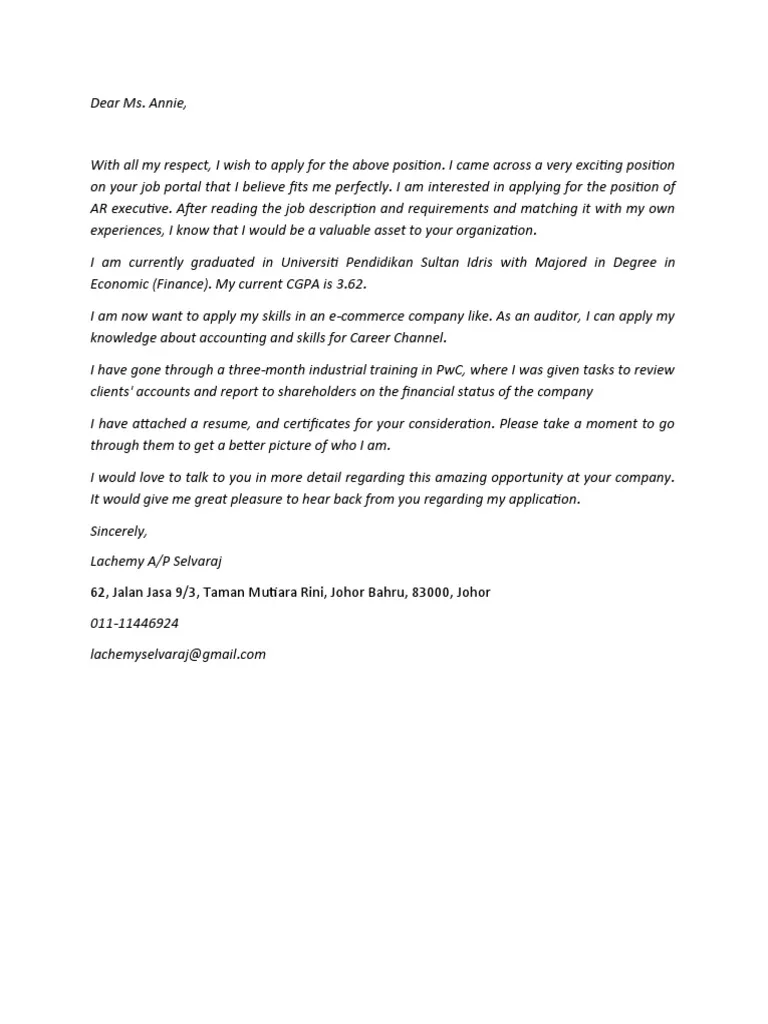
What is a Cover Letter and Why is it Important
A cover letter is a crucial document that accompanies your resume when applying for a job. It serves as an introduction, allowing you to showcase your personality, skills, and qualifications in a more personalized way than a resume can. While your resume provides a snapshot of your experience, a cover letter offers you the opportunity to elaborate on your accomplishments, explain your career goals, and express your genuine interest in the specific position and company. The importance of a cover letter cannot be overstated, as it’s often the first impression you make on a potential employer. A well-crafted cover letter can significantly increase your chances of landing an interview, while a poorly written one can lead to your application being overlooked. Consider your cover letter as your chance to make a compelling case for why you are the ideal candidate and set yourself apart from the competition. It’s your opportunity to tell a story and connect with the hiring manager on a deeper level, demonstrating not just your skills but also your enthusiasm and suitability for the role.
Key Components of a Cover Letter
A killer cover letter is composed of several essential components, each playing a vital role in presenting you as a strong candidate. From the header to the closing, every part should be carefully crafted to maximize its impact. By paying close attention to each element, you can create a cover letter that grabs the reader’s attention and encourages them to learn more about you. Here’s a breakdown of what you need to include:
Contact Information

Begin with your contact information, including your full name, address, phone number, and email address. This is the information the hiring manager will use to reach you. Ensure your email address is professional.
Date
Include the date you are sending the cover letter. This helps to keep track of the application timeline.
Recipient’s Information
Address your letter to the hiring manager or the specific person listed in the job posting. If you cannot find a name, use a general title such as ‘Hiring Manager’.
Salutation

Use a formal salutation such as “Dear Mr./Ms./Mx. [Last Name],” or “Dear Hiring Manager.” Avoid using informal greetings.
Opening Paragraph
Start with a compelling opening that immediately grabs the reader’s attention. State the position you are applying for and how you found the job. You can also include a brief statement about why you are interested in the role and the company. Keep your opening concise and enthusiastic.
Highlighting Your Skills and Experience
The body of your cover letter is where you highlight your skills and experience relevant to the job. Focus on how your qualifications align with the job requirements. Provide specific examples that demonstrate your achievements and how you can contribute to the company’s success. Avoid simply restating your resume; instead, provide context and elaborate on your accomplishments.
Quantify Achievements

Whenever possible, quantify your achievements with numbers and data. For example, instead of saying “Managed social media accounts,” say “Increased social media engagement by 30% in six months.”
Tailoring to the Job Description
Carefully review the job description and tailor your cover letter to match the required skills and qualifications. Use keywords from the job posting to demonstrate that you meet their needs.
Expressing Enthusiasm
Show your enthusiasm for the position and the company. Explain why you are excited about the opportunity and what you can bring to the team. This demonstrates your genuine interest in the role.
Closing the Cover Letter

Your closing paragraph should summarize your interest in the position and reiterate your qualifications. It should also include a call to action, encouraging the hiring manager to take the next step.
Call to Action
Clearly state your availability for an interview and express your eagerness to discuss your qualifications further. Make it easy for the hiring manager to contact you.
Formal Closing
Use a formal closing such as “Sincerely,” “Best regards,” or “Thank you.” Follow this with your typed name.
Proofreading and Formatting

Proofreading and formatting are critical to ensuring your cover letter is professional and error-free. A cover letter riddled with mistakes can create a negative impression and diminish your chances of getting an interview. Take the time to carefully review your cover letter for any typos, grammatical errors, or formatting inconsistencies. Consider asking a friend, family member, or career counselor to proofread your letter as well. Consistent formatting, including font style, size, and spacing, is also essential for readability. Use a professional font and maintain a consistent layout throughout the document. A well-formatted and error-free cover letter demonstrates your attention to detail and professionalism.
Common Mistakes to Avoid
Avoid these common mistakes to make your cover letter stand out. These are the top mistakes people make and that can make your application get discarded.
Using Keywords
Don’t just list keywords; integrate them naturally into your sentences. Use them strategically to show how your skills match the job description.
Length and Tone

Keep your cover letter concise, ideally no more than one page. Maintain a professional and enthusiastic tone throughout. Avoid sounding too casual or overly formal.
Cover Letter Examples
Reviewing cover letter examples can provide inspiration and guidance. Search online for samples relevant to your industry and the type of job you are applying for. Pay attention to the structure, language, and tone used in these examples. Adapt the best practices to your own cover letter, ensuring it reflects your unique skills and experiences.
Cover Letter Template
Using a cover letter template can provide a structured framework for your writing. Many templates are available online, offering pre-formatted layouts with placeholders for your information. While templates can save time, be sure to customize the content to reflect your specific qualifications and the requirements of the job. Personalizing the template ensures your cover letter stands out from the crowd and accurately represents you as a candidate. Remember to adapt the template to your specific needs rather than simply filling in the blanks. Consider the job requirements and company culture to ensure your application is relevant and engaging.
In conclusion, a well-crafted cover letter is a powerful tool in your job search arsenal. By understanding its importance, following key components, avoiding common mistakes, and using best practices, you can create a compelling cover letter that grabs the attention of hiring managers and significantly increases your chances of landing an interview. Take the time to tailor your cover letter to each job application and highlight your unique skills and experiences. With a well-written cover letter, you’ll be well on your way to securing your dream job. Remember to proofread carefully, and don’t be afraid to seek feedback from others. Good luck!