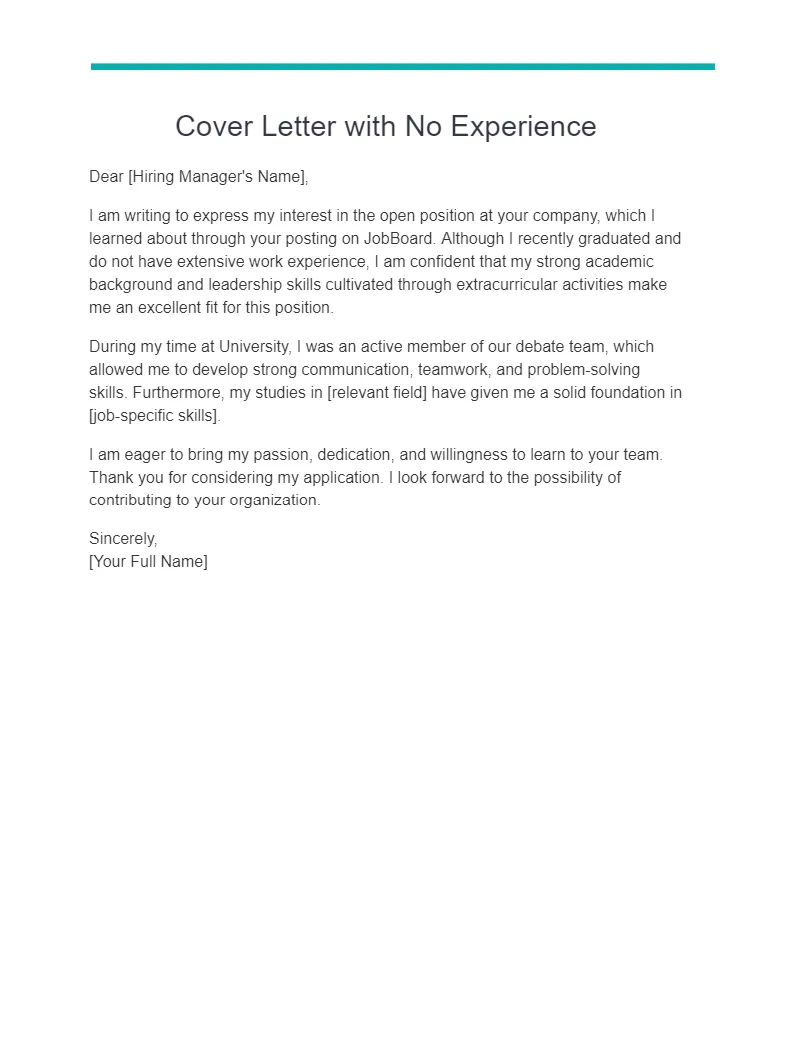
Understanding the Purpose of an Internship Cover Letter
An internship cover letter serves as your initial introduction to a potential employer, and it’s your chance to make a positive first impression. Even if you lack direct work experience, a well-crafted cover letter can effectively showcase your skills, enthusiasm, and potential. The primary goal of the cover letter is to convince the hiring manager that you are a suitable candidate for the internship and that you possess the qualities that align with the company’s needs. It allows you to elaborate on your resume, providing context and demonstrating your personality, which often goes unnoticed in a resume. Your cover letter is a vital tool for communicating your passion for the field and your eagerness to learn and contribute to the company.
Highlighting Transferable Skills (Even Without Experience)
When writing an internship cover letter with no prior experience, the focus should shift toward transferable skills. These are skills that you’ve gained through various activities, such as academics, extracurriculars, volunteer work, or personal projects. Transferable skills are universal abilities that can be applied across different roles and industries. Highlighting them allows you to demonstrate your capabilities and potential to the hiring manager. It is crucial to recognize and articulate these skills effectively. These could include communication, teamwork, problem-solving, time management, and leadership, among others. The key is to identify what you can bring to the table even without prior work experience.
Identifying Your Skills

Start by making a list of all the skills you possess, considering all aspects of your life. Think about what you’ve learned in school, in your hobbies, in volunteer experiences, or in any other activities you have participated in. For instance, if you’ve been a team captain, you likely have leadership skills. If you have worked on group projects, you’ve developed teamwork skills. If you’ve managed your own finances, you likely have strong organizational skills. Look beyond your academics; your interests and activities can offer insight into your skillset. Being able to identify these skills is the first step to crafting a compelling cover letter.
Providing Examples of Your Skills
Once you’ve identified your skills, provide specific examples to support your claims. Don’t just say you’re a good communicator; instead, provide an instance where you effectively communicated to achieve a goal. For example, if you were a member of a debate club, describe a time when you successfully persuaded the audience or judges. If you worked on a school project, explain how you collaborated with your team to overcome challenges. Quantify your achievements whenever possible. Instead of saying you improved sales, specify by what percentage or in what timeframe. Providing concrete examples makes your cover letter more convincing and shows the hiring manager that your skills are not just theoretical but applicable.
Showcasing Your Academic Achievements
Your academic achievements can be a strong selling point, especially if you lack professional experience. Mention your GPA if it’s impressive, and highlight relevant coursework or projects that align with the internship’s requirements. If you’ve received any academic awards or honors, be sure to include them. If you have completed research projects, describe your role and what you learned. Don’t hesitate to mention any presentations or publications you have been a part of. By showcasing your academic achievements, you demonstrate your dedication, intelligence, and ability to succeed in a structured environment. This can reassure the employer of your capabilities, even without prior work experience.
Demonstrating Your Passion and Enthusiasm

A cover letter is a great opportunity to express your passion for the field and your enthusiasm for the internship. Explain why you are interested in the role and what specifically attracts you to the company. Share your excitement about the opportunity to learn and grow. This enthusiasm can often compensate for a lack of experience. Describe what motivates you, and how your personal interests align with the internship. If you’ve followed the company’s work, mention specific projects or initiatives that resonate with you. Your genuine excitement will make you stand out and can convince the hiring manager that you’re the right fit.
Researching the Company and Internship
Before writing your cover letter, thoroughly research the company and the specific internship. Understand the company’s mission, values, and culture. Familiarize yourself with their products or services and their recent projects. This will help you tailor your cover letter to the specific needs of the employer. The more information you have, the better you can demonstrate how your skills and interests align with the company’s goals. Show that you are genuinely interested in the company, and show you have done your homework by mentioning specific projects or initiatives. This shows your dedication and makes your application stand out.
Tailoring Your Cover Letter to the Internship
Each internship is unique, so customize your cover letter to fit the specific requirements and responsibilities outlined in the job description. Analyze the job posting and identify the key skills and qualifications the employer is seeking. Use these as a framework to emphasize the transferable skills, academic achievements, and experiences that align with those requirements. Show that you have carefully read the job description and that you understand what the company is looking for. Address the specific needs of the internship, showing that you are the right fit for the role. Avoid sending a generic cover letter. Instead, personalize each one to demonstrate your interest and suitability.
Highlighting Your Goals and Career Aspirations

In your cover letter, articulate your career goals and how the internship will help you achieve them. Describe what you hope to gain from the experience and how it will contribute to your professional development. This demonstrates your forward-thinking approach and helps the employer understand your motivations. Be specific about your long-term goals and how the internship aligns with your career path. For example, you might mention your interest in gaining experience in a particular area or developing specific skills. Show that the internship is not just a job but a step toward achieving your future career aspirations.
Concluding Your Cover Letter with a Strong Call to Action
Conclude your cover letter with a clear and assertive call to action. Express your enthusiasm for the opportunity to interview and reiterate your interest in the internship. Thank the hiring manager for their time and consideration. Offer to provide any additional information they may need. Make it easy for the employer to take the next step by providing your contact information and indicating your availability. The call to action is your final opportunity to make a positive impression and encourage the hiring manager to contact you. A well-crafted conclusion will leave the employer with a positive impression and increase your chances of securing an interview.