Introduction
Landing your dream LPN (Licensed Practical Nurse) role starts with a compelling cover letter. A well-crafted cover letter is your first opportunity to make a strong impression on potential employers. It’s your chance to introduce yourself, highlight your relevant skills and experience, and express your enthusiasm for the position. In this guide, we’ll provide you with top tips to create an LPN cover letter that stands out and increases your chances of getting hired. We’ll explore how to showcase your abilities, tailor your letter to specific job descriptions, format it professionally, and avoid common pitfalls. By following these guidelines, you can create a cover letter that effectively represents you and your qualifications, helping you take the next step in your nursing career. Remember, the goal is to grab the reader’s attention and convince them that you are the best candidate for the job. A thoughtful and well-written cover letter can be the key to unlocking exciting opportunities in the healthcare field, helping you secure interviews and ultimately land your desired LPN position.
Highlighting Your Skills and Experience
Your LPN cover letter is the perfect place to highlight the skills and experiences that make you a strong candidate. Potential employers need to see not only your qualifications, but also how you can add value to their healthcare team. Focusing on your skills and experience is essential, demonstrating your competence and showing why you are the best choice for the job. Be clear and concise, using concrete examples to illustrate your capabilities. Quantify your achievements whenever possible to make a stronger impact, showcasing what you’ve achieved in previous roles. Make it easy for the reader to immediately grasp your key strengths, which is the key to making your cover letter successful, which is the first step in building a great career in the medical field. Think about how your specific experiences and skills align with the job requirements and what the hiring manager is looking for in a candidate. This targeted approach will make your application more relevant and increase your chances of getting an interview.
Skills to Emphasize

When listing your skills, focus on those most relevant to the LPN role. Consider both your technical and soft skills, showcasing a well-rounded understanding of the nursing profession. Technical skills are the practical abilities you use in your daily work. Highlight skills like medication administration, wound care, vital sign monitoring, and patient assessment. These are fundamental to the job, and employers will look for these essential capabilities. Then, discuss your soft skills, such as communication, empathy, and critical thinking. These are just as important because they affect how you interact with patients and work within a healthcare team. Mention your ability to communicate effectively with patients, families, and colleagues. Include examples of your active listening skills, as well as your ability to remain calm and efficient under pressure. Your ability to adapt to different situations and solve problems is what helps you to stand out in your role and show a genuine commitment to patient care.
Experience to Showcase
Your cover letter should provide specific examples of your past experiences that align with the job you’re applying for. This provides concrete evidence of your qualifications and achievements. Describe your responsibilities in previous roles, emphasizing any specializations or areas of expertise. Did you work in a particular type of healthcare setting, such as a hospital, clinic, or long-term care facility? If so, mention this. Quantify your achievements, showing the results of your efforts. For example, did you improve patient outcomes, reduce medication errors, or increase patient satisfaction scores? Whenever possible, include specific numbers or data. This will not only show your competency but also allow the hiring manager to visualize your impact. Keep your descriptions brief and focused, targeting your qualifications to the job requirements, and ensuring the employer sees the value you bring to the position.
Tailoring Your Cover Letter
Customizing your cover letter for each job application is a critical step in making a positive impression. It’s not enough to simply reuse the same template; your letter should reflect your understanding of the specific role and the employer’s needs. This extra effort demonstrates your genuine interest and attention to detail, which can significantly increase your chances of success. Tailoring your cover letter also allows you to highlight the skills and experiences that are most relevant to the particular job. This ensures that the hiring manager immediately sees how you meet their requirements. Always take the time to research the employer and the specific requirements of the role. Show the hiring manager that you understand their needs and are excited about the opportunity to contribute to their team. With careful customization, your cover letter will stand out as you showcase your dedication and desire to succeed in the position.
Researching the Employer

Before you start writing, take time to research the employer. This will allow you to personalize your cover letter and show that you are genuinely interested in the organization. Visit the company’s website and social media profiles to learn about its mission, values, and recent achievements. Look for information about the healthcare services they provide, the populations they serve, and their reputation in the community. Understanding the employer’s culture will help you tailor your letter to their specific needs and values. You can use this knowledge to highlight how your skills and experience align with their mission. For example, if the employer values patient-centered care, you can emphasize your commitment to providing compassionate and personalized care. Researching the employer shows that you have done your homework and are genuinely interested in the opportunity. This effort will help you make a strong and lasting impression, significantly improving your chances of securing an interview and ultimately, landing the job.
Customizing to the Job Description
Carefully review the job description and identify the key skills, qualifications, and experiences the employer is looking for. Customize your cover letter to address these specific requirements. Use the job description as a guide to select the most relevant skills and experiences to highlight. Tailor your language to match the terminology used in the job posting. This shows that you understand what the employer is looking for and that you have the required qualifications. For each key requirement, provide specific examples of how you have demonstrated the skill or experience in the past. Quantify your achievements whenever possible to make your accomplishments more concrete and impactful. Ensure that your cover letter provides a clear and concise picture of how you meet the employer’s needs. Remember, the goal is to convince the hiring manager that you are an ideal fit for the role. With careful customization, your cover letter will stand out and significantly increase your chances of getting hired.
Formatting and Style
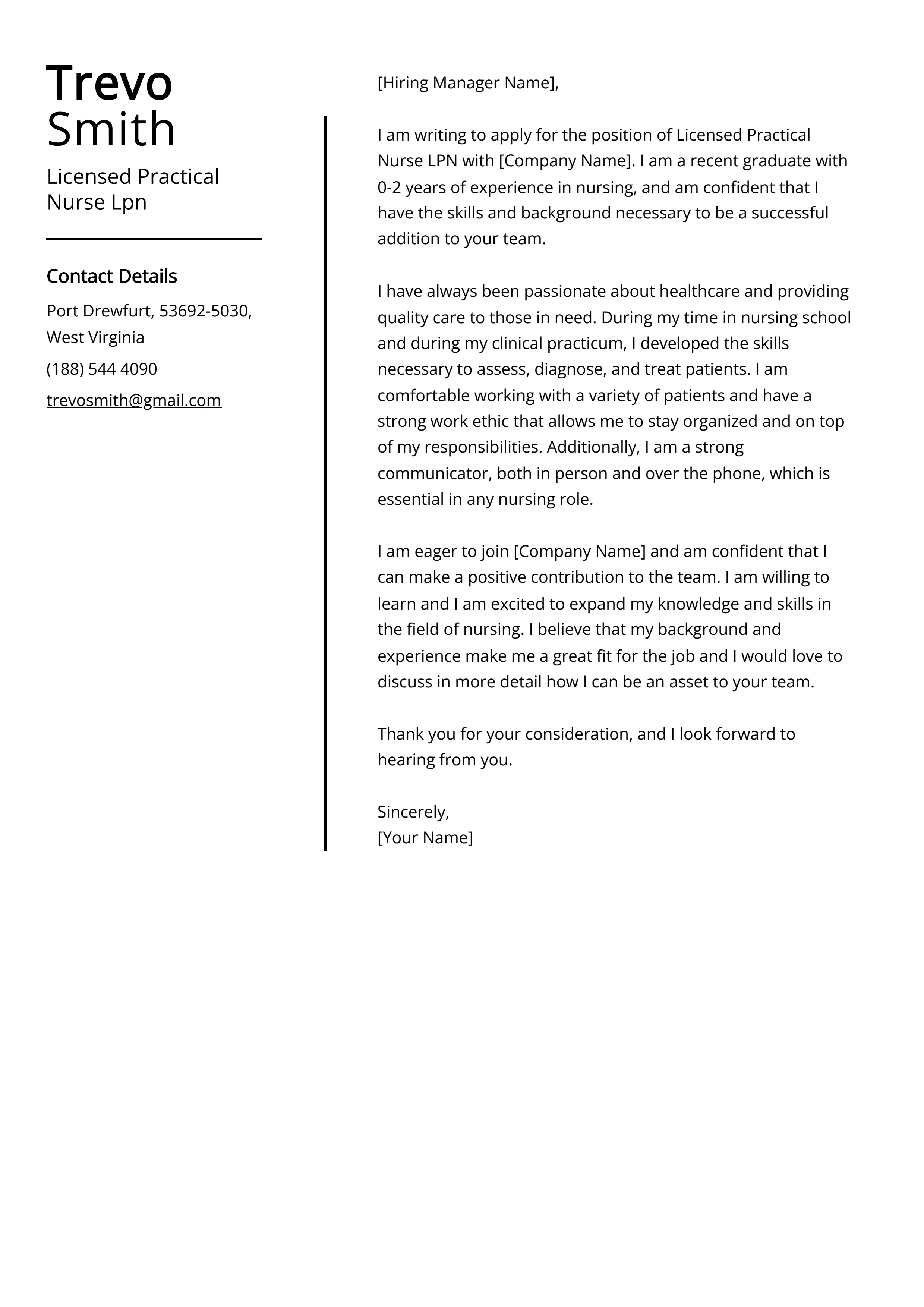
The formatting and style of your LPN cover letter contribute greatly to its overall professionalism. A well-formatted letter is easy to read and makes a positive impression on the hiring manager. Careful attention to the layout, font choice, and language will enhance your credibility and showcase your attention to detail. Maintaining a professional tone is crucial for communicating your qualifications and enthusiasm effectively. Proper formatting demonstrates your professionalism, enhancing the impact of your skills and experience, ultimately leading to a more successful job application. Remember, the way your cover letter looks is just as important as its content. Your goal is to present yourself in the best possible light, and this means paying attention to the overall aesthetic of your application.
Professional Formatting Tips

Your cover letter should be visually appealing and easy to read. Use a standard font such as Times New Roman, Arial, or Calibri, with a font size of 10-12 points. These fonts are professional and easy on the eyes. Ensure there is adequate spacing between paragraphs and lines. A clean layout makes the document easier to navigate and prevents the reader from getting overwhelmed. Keep your letter to one page, as hiring managers typically don’t have a lot of time to read through lengthy applications. Use clear and concise language, avoiding long, complex sentences. Bullet points can be used to highlight skills or accomplishments. This format makes your content more accessible. Using these simple formatting tips can help you make a strong impression. With careful formatting, you’ll be able to present your information in a clean and professional way, increasing the chances of your application being considered for the job.
Using Action Verbs
Action verbs are powerful tools to make your cover letter more engaging and highlight your accomplishments. They help to convey a sense of activity and achievement. Instead of saying “Responsible for patient care,” use action verbs like “Administered medications,” “Managed patient assessments,” or “Implemented care plans.” Use strong, active verbs to describe your duties and responsibilities. Examples of effective action verbs include “Assessed,” “Collaborated,” “Educated,” “Implemented,” “Monitored,” and “Trained.” When describing your experience, start each sentence with an action verb. This helps to create a concise and dynamic writing style. By using action verbs, you transform your descriptions from passive statements into active demonstrations of your skills and achievements. This makes your cover letter more compelling and memorable, increasing your chances of making a positive impression on the hiring manager.
Proofreading and Editing
Proofreading and editing your cover letter are critical steps to ensure it is polished and error-free. Mistakes can make your cover letter seem unprofessional and undermine your credibility. Careful review can help to catch and correct any errors. A well-edited cover letter showcases your attention to detail and commitment to quality. Errors, such as spelling mistakes, grammatical errors, and typos, can detract from the content and create a negative impression. Always thoroughly proofread your cover letter before submitting it. This simple step can significantly impact your success in the job application process. Making sure your cover letter is error-free can prevent any negative perceptions and increase your chances of getting hired.
Common Mistakes to Avoid

Avoid common mistakes that can weaken your LPN cover letter. One common error is using generic or templated language. This does not effectively highlight your unique skills and experience. Avoid providing irrelevant information. Keep your focus on the job and your qualifications. Be sure to avoid grammatical errors and typos. These errors can make you seem unprofessional and detract from the quality of your application. Finally, do not exceed the one-page limit. Long cover letters can make your application less effective. By avoiding these common pitfalls, you can significantly improve the effectiveness of your cover letter. Take the time to review your letter for mistakes. You’ll be well on your way to creating a strong impression and securing your desired position.
Seeking Feedback
Ask a trusted friend, colleague, or career counselor to review your cover letter. Another pair of eyes can often catch errors or suggest improvements you may have missed. Get feedback on your letter’s content, clarity, and overall effectiveness. Ask for specific feedback on whether your skills and experience are clearly highlighted. Ask if the letter is well-organized, easy to read, and free of errors. Be open to constructive criticism and make revisions based on the feedback you receive. Seeking feedback is an essential part of the writing process. It helps to ensure your cover letter is as strong and effective as possible. This process not only can improve your application but also helps you develop stronger writing skills and learn how to create a compelling cover letter.
Conclusion
Crafting a successful LPN cover letter takes time and effort, but the rewards are significant. By following these tips, you can create a compelling cover letter that highlights your skills, experience, and enthusiasm for the role. Remember to highlight your skills, tailor your letter to the job description, format it professionally, and proofread carefully. By taking these steps, you’ll greatly increase your chances of making a positive impression on potential employers. A well-written cover letter can open doors to exciting opportunities. It allows you to present yourself as the best candidate for the job. Good luck with your job applications, and remember to continually refine your cover letter to maximize your chances of career success in the field of nursing. Your dedication to creating a polished and compelling cover letter will significantly improve your prospects in your job search. Best of luck, and happy job hunting!