Top 5 Tips for Software Engineer Cover Letters
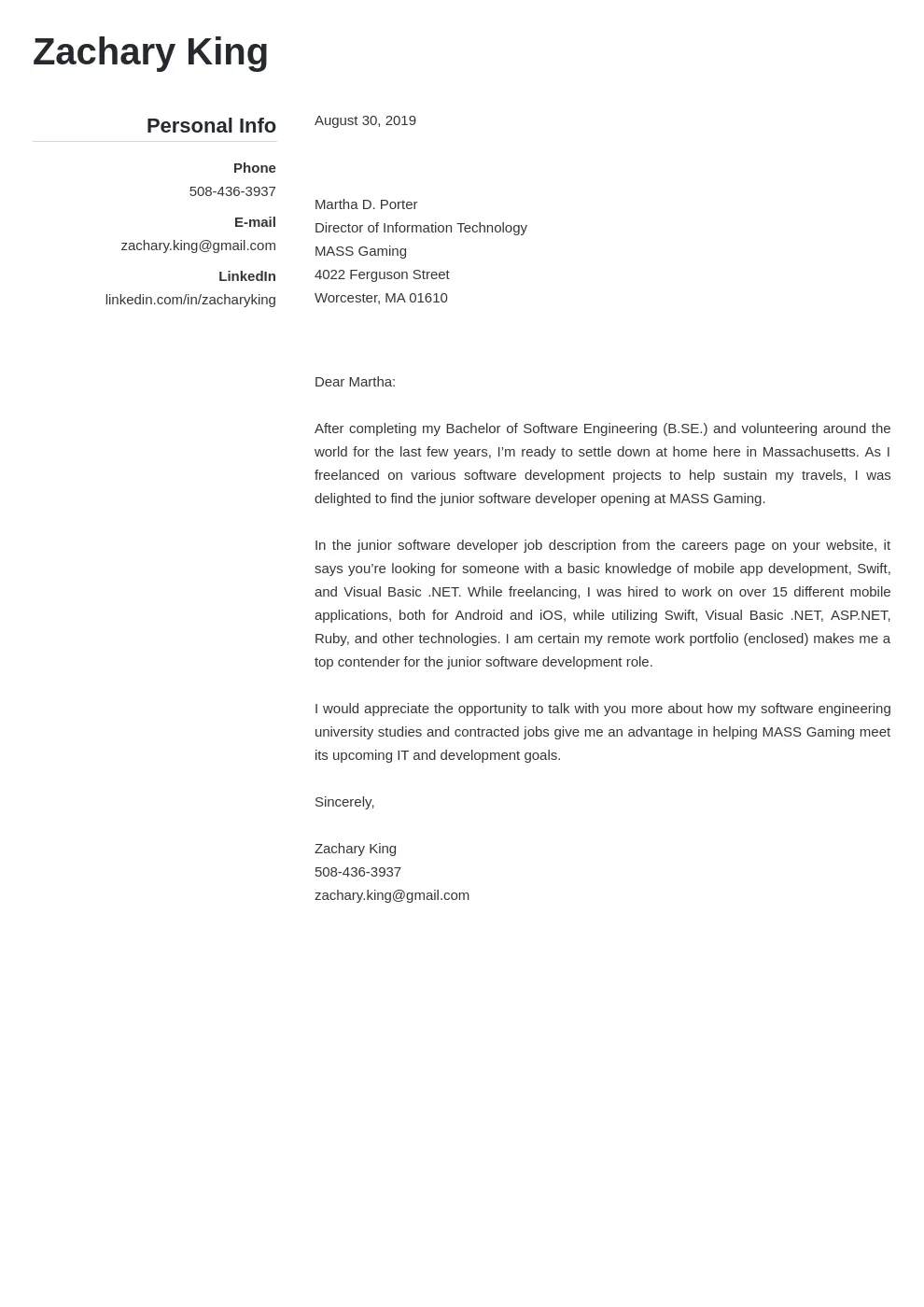
A well-crafted cover letter is your first opportunity to make a strong impression on potential employers. For software engineers, this document is crucial as it showcases your technical skills, passion, and suitability for the role. This guide offers top tips to help you create a compelling cover letter that stands out. By following these guidelines, you can increase your chances of landing an interview and advancing your career in software engineering. Remember, each cover letter should be tailored to the specific job and company, reflecting your unique qualifications and enthusiasm.
Highlight Your Technical Skills
Your cover letter is where you demonstrate your technical expertise. Begin by clearly listing the programming languages, frameworks, and tools you’re proficient in. Instead of simply listing skills, provide context and examples. Describe how you’ve used these skills in past projects. For instance, mention how you utilized Java to develop a specific application or used Python to automate a particular task. Include details about the challenges you overcame and the solutions you implemented. This helps potential employers understand not just what you know, but how you apply your knowledge to solve real-world problems. Don’t forget to align your skills with the job description to show you meet the requirements.
Quantify Your Achievements

Use numbers and data to illustrate your accomplishments. Instead of saying ‘Improved efficiency’, state ‘Improved system efficiency by 15% by optimizing database queries’. Quantifiable achievements provide concrete evidence of your impact and value. For example, mention how your code improved system performance, reduced bug counts, or saved the company money. If you led a team, highlight the projects you managed, the number of team members, and the successful outcomes. When describing projects, include specific metrics. For example, indicate the number of users or the project’s financial value. This approach is much more impactful than vague statements, showcasing your ability to deliver results.
Showcase Your Passion for Technology
Express your genuine enthusiasm for technology and software engineering. Discuss what excites you about the field and the specific company you’re applying to. Demonstrate that you stay updated with the latest industry trends, technologies, and best practices. Mention any personal projects, open-source contributions, or participation in tech communities or conferences. If you’re passionate about a particular technology, like AI, blockchain, or cloud computing, mention why it interests you. Personalize your letter to show that you are not just looking for a job, but that you’re genuinely interested in contributing to their team. This passion can significantly differentiate you from other candidates, especially in a competitive field.
Tailor Your Letter to the Job
Avoid using a generic cover letter. Instead, tailor each letter to the specific job and company. Read the job description carefully and identify the key requirements and skills. Then, customize your letter to address these requirements directly. Explain how your experience and skills align with what the employer is seeking. Research the company’s mission, values, and recent projects. Show that you understand their work and why you want to contribute. Mention specific projects or initiatives that resonate with you. This demonstrates your genuine interest and your understanding of the company’s goals. A tailored letter will show that you’ve invested time and effort, making a strong impression on the hiring manager.
Proofread and Perfect Your Cover Letter
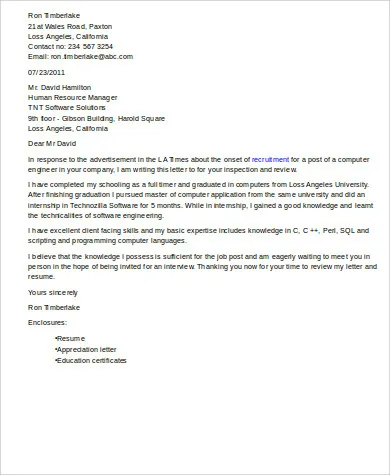
Before submitting your cover letter, thoroughly proofread it for any errors in grammar, spelling, and punctuation. Errors can create a negative impression and suggest a lack of attention to detail. Consider asking a friend or colleague to review your letter as well. They can offer a fresh perspective and catch any mistakes you might have missed. Ensure the formatting is consistent and easy to read. Use clear and concise language, avoiding jargon or overly complex sentences. Make sure your contact information is correct and up-to-date. A polished cover letter reflects your professionalism and commitment to quality. Taking this extra step shows you’re serious about the opportunity.
Essential Components of a Software Engineer Cover Letter
Header Information
Start with your contact information including your name, phone number, email address, and professional portfolio link (e.g., GitHub, personal website). Include the date and the hiring manager’s name and title, if known. If you don’t know the name, use a professional greeting like ‘Dear Hiring Manager’. Ensuring your contact information is accurate makes it easy for the employer to reach you. The date and recipient’s details show attention to detail and indicate you’re applying for a specific position. Keep your header clean and professional, setting the tone for the rest of your letter.
Greeting and Introduction

Begin your cover letter with a professional greeting. Start with a brief introduction that states the position you’re applying for and where you saw the job posting. Clearly state your interest in the role and the company. Briefly mention your most relevant skills or experiences. The introduction should capture the reader’s attention and make them want to learn more about you. Tailor your opening sentence to the job description. This helps show the hiring manager that you understand the role and have taken the time to prepare your application. Avoid generic openings like ‘To whom it may concern’.
Body Paragraphs
The body paragraphs are the core of your cover letter. Use this section to expand on your skills, experiences, and achievements. Provide specific examples of your accomplishments. Describe projects and the challenges you faced and how you resolved them. Relate your experiences to the job requirements. Explain how your skills and experience align with the company’s needs. Be sure to highlight accomplishments that showcase your ability to contribute to the team’s success. Quantify your results whenever possible. This part is where you make a compelling case for why you are the best candidate for the job. Make it easy for the hiring manager to see your qualifications and how they fit the role.
Call to Action and Closing
End your cover letter with a strong call to action. Express your interest in an interview and reiterate your enthusiasm for the position. Thank the hiring manager for their time and consideration. Include a polite and professional closing, such as ‘Sincerely’ or ‘Best regards’, followed by your name. Provide a way for the hiring manager to easily contact you. Restate your contact information. Reiterate your interest in the position and the company. A strong closing shows you are eager to move forward in the hiring process and makes a lasting impression.
Formatting and Design

Font and Readability
Choose a professional and easy-to-read font like Arial, Calibri, or Times New Roman, and set the font size to 11 or 12 points. Use consistent formatting throughout the document. Use standard margins (1 inch). Break up your text into short paragraphs to make it easier to read. Ensure there’s enough white space between paragraphs and sections. The overall goal is to create a clean and visually appealing cover letter. Clear formatting allows the hiring manager to quickly scan the document. Poor formatting can be distracting, leading the reader to miss key details. A well-formatted cover letter shows attention to detail and makes a positive impression.
Concise and Engaging Language
Use clear, concise, and engaging language throughout your cover letter. Avoid jargon and overly complex sentences. Get straight to the point, conveying your key skills and experiences. Keep your paragraphs short and focused, with one or two main ideas per paragraph. Use active voice to make your writing more dynamic and engaging. Incorporate strong action verbs to describe your accomplishments. This helps keep the reader interested and makes your letter more memorable. Clear and concise language makes your cover letter easier to read and understand. This ensures your key points are conveyed efficiently.
Common Mistakes to Avoid

Generic Content
Avoid using generic cover letters that could be sent to any company. Tailor each cover letter to the specific job you are applying for. Research the company and address their specific needs. Show you’ve invested time and effort in preparing your application. Highlight how your skills and experiences match the requirements. Hiring managers can quickly identify generic cover letters. This can lead to your application being rejected. Instead, create a personalized cover letter. Demonstrate genuine interest and show how you fit the company’s culture.
Typos and Grammatical Errors
Always proofread your cover letter meticulously. Errors in spelling, grammar, and punctuation can make you look unprofessional. They can undermine your credibility. Use spell-check tools and grammar checkers, but don’t rely on them entirely. Ask someone else to review your cover letter before you submit it. A fresh pair of eyes can catch mistakes you might miss. Ensure your cover letter is free of errors. Take the time to review and revise. This attention to detail is crucial in conveying a professional image and getting you to the interview stage.
Lack of Specific Examples
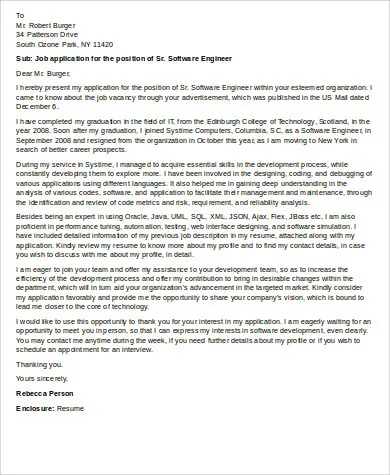
Avoid making vague statements about your skills and experience. Provide specific examples to support your claims. Instead of saying ‘Experienced in Java’, describe a project where you used Java. Include the challenges you faced, the solutions you implemented, and the results achieved. Quantify your accomplishments whenever possible. Use metrics to illustrate your achievements. Specific examples and results provide concrete evidence of your abilities. They make your cover letter much more compelling. The best way to illustrate your value is to show, not just tell.
In conclusion, writing a strong cover letter is a crucial step in the job application process for software engineers. By following these top 5 tips, you can craft a compelling cover letter that highlights your technical skills, quantifies your achievements, showcases your passion, and is tailored to the specific job. Remember to proofread, format professionally, and avoid common mistakes. Good luck with your job search!